Why Single SMTP Fails at Enterprise Scale
A single shared sender mailbox, rapidly growing notification volumes, and enterprise mail throttling limits create delivery delays, failures, and platform-wide impact in large-scale K2 environments.

Enterprise low-code platforms have become foundational to modern digital transformation. Organizations rely on them to rapidly deliver secure, scalable, and business-critical applications while maintaining governance, compliance, and operational control.
These platforms are no longer experimental tools. They support core business processes, serve large user bases, and operate across multiple departments, business units, and external stakeholders.
🚀 Enterprise Foundation
Low-code platforms have evolved into enterprise-grade foundations that balance speed, scalability, and governance—enabling organizations to innovate without compromising control or security.
Nintex Automation K2 is an enterprise-grade low-code platform designed to orchestrate complex, human-centric workflows at scale, where growing adoption exposes email notification as a critical platform challenge.
Centralized workflow runtime for enterprise-wide automation
Role-based security with enterprise authentication
Comprehensive auditing and reporting capabilities
Scalable architecture supporting multiple applications
High-volume workflows make notification delivery a platform concern
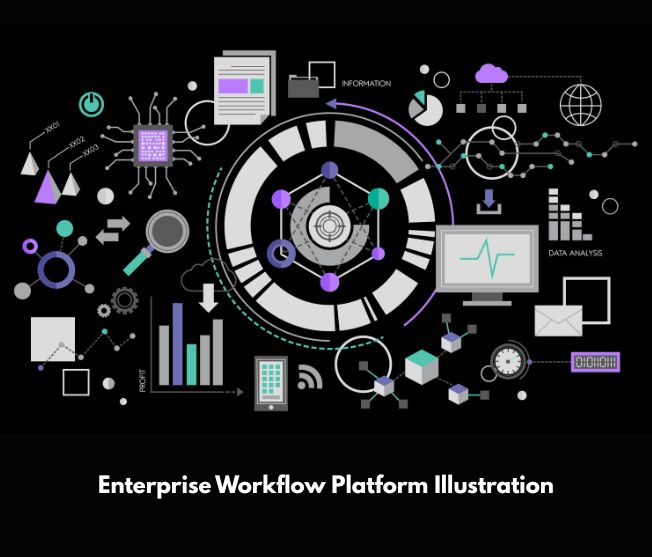
A single shared sender mailbox, rapidly growing notification volumes, and enterprise mail throttling limits create delivery delays, failures, and platform-wide impact in large-scale K2 environments.

These limitations lead to delayed or missed notifications, unpredictable email failures under load, cross-application impact from high-volume workflows, and reduced confidence in K2 as a central enterprise automation platform.

Platform owners and enterprise architects increasingly require application-specific sender mailboxes, multi-SMTP routing, controlled distribution of email load to prevent throttling, and isolation of notification traffic between applications—making these capabilities essential platform governance requirements rather than optional technical enhancements.

To overcome these challenges, a custom multi-SMTP email service extension for Nintex Automation K2 was implemented, introducing a decoupled notification layer that supports multiple SMTP configurations (Exchange, Microsoft 365, relay services, and third-party providers), enables workflow-level mail routing, distributes email load across accounts, and enforces controlled sender identities—transforming email delivery from a single bottleneck into a scalable and resilient enterprise service.

The solution provides centralized SMTP configuration through the CCTS K2 SMTP Integrator, enables workflow-level control by safely bypassing the default K2 notifier, and ensures application isolation through dedicated SMTP routing and sender accounts—delivering a supportable, upgrade-safe, and enterprise-ready design aligned with K2’s native architecture.

Delivering a scalable multi-SMTP email capability in Nintex Automation K2 is not just about writing code.
It requires deep platform expertise, strong governance practices, and enterprise architecture experience.
CCTS Global helps organizations treat Nintex Automation K2 as a true enterprise platform,
ensuring it scales reliably as automation adoption accelerates.