
about banner
Keep up with the pace
BEYOND CLOUD
Blogs
Last Call for SharePoint 2016/2019: Secure, Migrate, and Modernize Now
  • May 20, 2025
  • 0 min 54 sec read

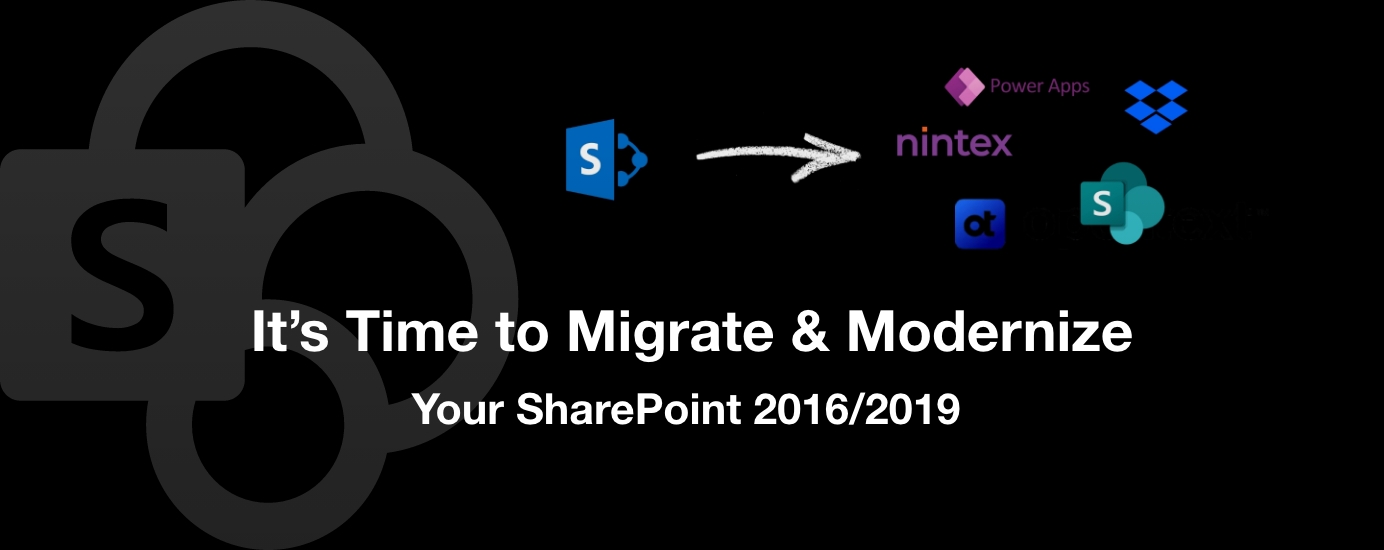
With end-of-support (EOS) for SharePoint Server 2016 and 2019 rapidly approaching, organizations face a pressing need to modernize their collaboration and content management platforms. Once support ends, Microsoft will no longer provide security updates, bug fixes, or technical assistance—leaving systems increasingly vulnerable to cyber threats and compliance risks. Maintaining outdated infrastructure not only exposes businesses to potential data breaches but also drives up operational costs due to the need for custom support, legacy hardware maintenance, and compatibility issues with modern applications. As the EOS deadline looms just a day away, organizations must act swiftly. A strategic move to SharePoint Online or Microsoft 365 offers not only improved security and compliance but also enhanced productivity through cloud-native features, automation, and seamless integration with the broader Microsoft ecosystem. However, modernization isn’t one-size-fits-all. We will help you evaluate whether migrating to SharePoint Online or exploring alternative platforms better aligned with your business ecosystem is the right path forward. Our team will guide you through a tailored strategy—starting from platform assessment to planning, execution, and change management—ensuring a smooth and future-ready transition with minimal disruption.

Expand

A Strategic Shift in IT Shared Services Support for a Global Multinational
  • Staff, CCTS Global
  • January 25, 2025
  • 1 min 13 sec read
  • industry
  • Services
  • Topic

CCTS has been entrusted by a leading multinational corporation to revamp and support its IT Shared Services (ITSS), which includes CRM, Helpdesk, Onsite, and Command Centre Operations. This comprehensive service overhaul involves the migration from IBM LN to K2, along with managing and optimizing various critical business applications and knowledge bases. Scope of Service: The service encompasses maintaining and updating system configurations, performing impact analysis, and developing contingency plans. CCTS plays a pivotal role in managing the entire solution, which includes CRM systems, Helpdesk applications, Call Handling, Case Management, Escalation Processes, FAQs, and Change Management. Technology Used: To streamline operations and improve efficiency, the project leverages a range of technologies, including MS SharePoint, WS02, K2 Black Pearl, RPA, and other advanced tools. Strategic Assessment and Recommendations: CCTS conducted a thorough portfolio assessment to optimize application interactions, enhance business outcomes, and identify opportunities for outsourcing. The team suggested a structured IT governance model that clearly defines decision-making processes, responsibilities, and authorities, ensuring the alignment of IT strategies with business objectives. Roadmap and Delivery Model: A clearly defined roadmap was established to ensure predictable service quality at predefined costs. CCTS’s 'Hybrid Onsite/Offshore Delivery Model' offers a cost-effective yet responsive service, balancing operational efficiency with agility. By implementing a robust IT governance structure and optimizing the interaction between applications, CCTS has positioned the MNC for enhanced service quality and operational efficiency. This strategic partnership underscores the critical role of effective ITSS Management in achieving business success.

Expand
Navigating the Evolving Sustainability Landscape
  • September 22, 2024
  • 1 min 27 sec read

Navigating the Evolving Sustainability Landscape As businesses worldwide aim to meet their net-zero and sustainability goals, they are confronted with an increasingly complex regulatory environment. Despite this, only 10% of CFOs feel their companies are ready for the upcoming detailed reporting requirements, and just 15% have effectively aligned their ESG strategies to drive both sustainability progress and business value. The Shifting ESG Regulatory Framework Businesses are now facing a broad array of new environmental, social, and governance (ESG) reporting standards. Key regulations include the European Union’s Corporate Sustainability Reporting Directive (CSRD), the U.S. SEC’s Climate-Related Disclosures (CRDs), and frameworks from the International Sustainability Standards Board (ISSB). To meet these standards, policymakers are focusing on three core approaches: Mandated Disclosures to improve market transparency and highlight ESG risks and opportunities. Carbon Pricing on Imports to create fairness for domestically produced goods and reduce carbon footprints. Incentives and Grants to influence business decisions toward more sustainable activities. While adhering to these regulations may seem daunting for finance and sustainability teams, they also offer a significant opportunity. Emerging technologies can streamline data collection, foster smarter decision-making, and help organizations not only comply but also thrive through their sustainability efforts. Leveraging Reinvention for Growth By integrating advanced technology with strategic insight, companies can move beyond compliance to unlock new value through sustainability. Our research highlights that companies embracing continuous reinvention, dubbed “Reinventors,” saw revenue growth outpace others by 15 percentage points from 2019 to 2022. By 2026, this gap is projected to widen to 37 percentage points. Moreover, these Reinventors see greater profitability, with an estimated annual margin increase of 2.9 percentage points relative to companies not pursuing reinvention.Beyond financial success, Reinventors consistently outperform their competitors on non-financial metrics, showcasing the broad benefits of a robust reinvention strategy.

Expand